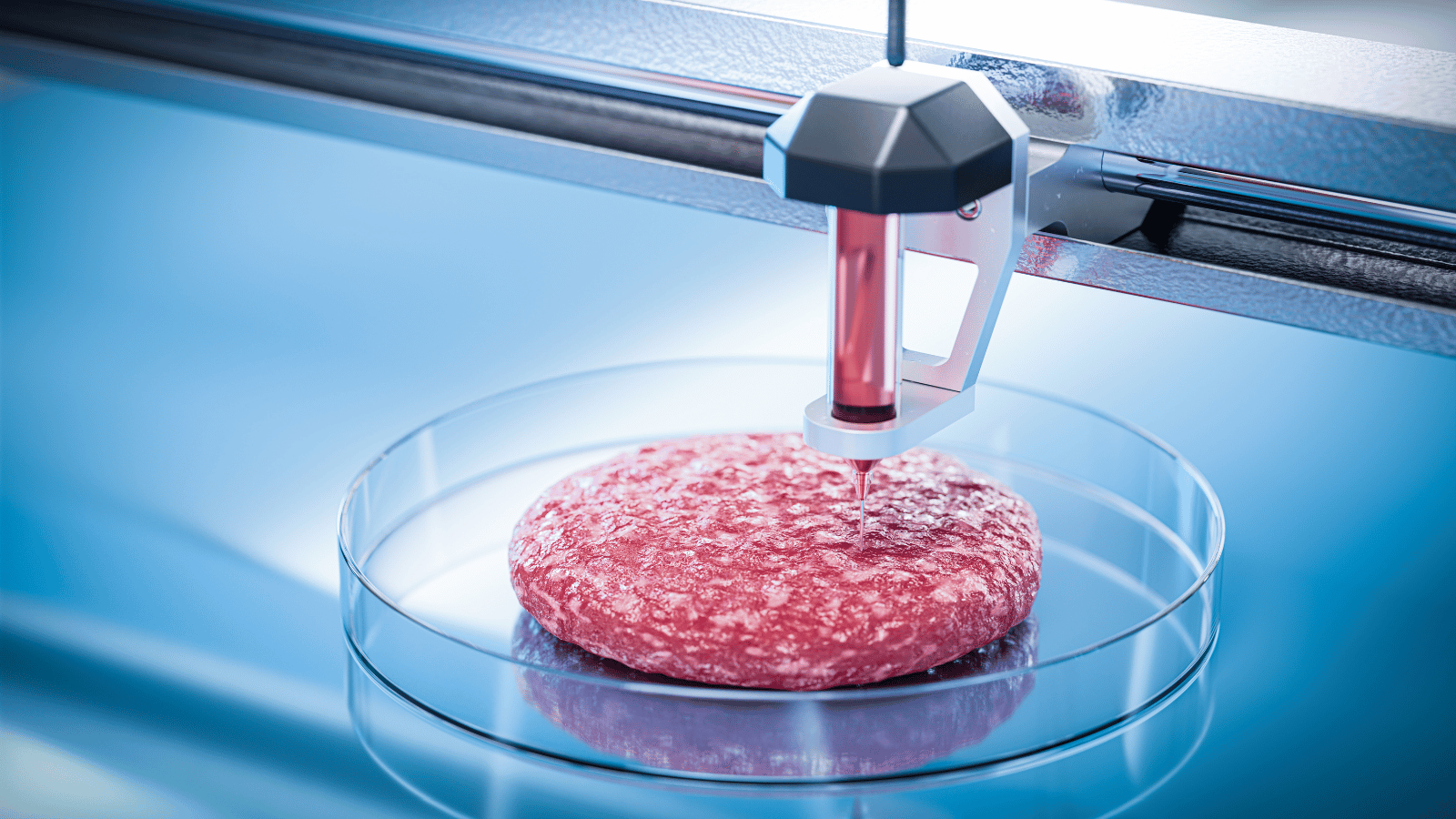
🖨️ How Does 3D-Printed Meat Work?
Many printed meat alternatives contain plant proteins, vegetable oils, water, and other food ingredients.
Similar to how a regular 3D printer builds objects layer by layer, a food printer uses edible mixtures to create shapes and textures resembling meat.
A 2025 Food Chemistry review identified soy and pea proteins among the ingredients being studied.
However, plant-based printed meat differs from cultivated meat, which involves growing animal cells.
🍗 Is It Better Than Regular Chicken?
That depends on what we're comparing.
Conventional chicken provides complete protein and nutrients such as vitamin B12. Plant-based alternatives can also provide protein and may contain fibre, which chicken naturally lacks.
However, some alternatives contain more sodium or require added vitamins and minerals.
This means two products that look almost identical could have different nutritional values, making ingredient labels especially important.
3D printing doesn't automatically make food healthier.
🔬 What About Safety and Affordability?
Like conventional foods, printed alternatives require proper handling and hygiene to prevent contamination.
Cost presents another challenge. Specialized equipment, ingredients, and slower production processes can make manufacturing expensive.
Researchers are also working to improve flavour and texture, since looking like chicken doesn't necessarily mean tasting like it.
🌱 Could This Change Farming?
Beyond what reaches our plates, this technology could influence the farmers supplying our food.
Conventional poultry producers may face new competition, while farmers growing soybeans, peas, and other ingredients could benefit from increased demand.
Printed alternatives might also reduce certain resource demands, although their environmental impact depends on ingredients, energy use, and production methods.
🌍 The Bigger Picture
3D-printed meat offers new possibilities, but innovation alone doesn't guarantee better nutrition, affordability, or sustainability.
A piece of printed chicken may eventually look and taste remarkably similar to conventional chicken, but the journey behind each product will remain different.
As food technology develops, understanding those differences will become increasingly important.
The future may not be about choosing between traditional farming and food printing, but finding where each can contribute to a food system that's nutritious, affordable, and transparent.