🌼 Can Flowers Help Keep Pests Away?
Surprisingly, yes!
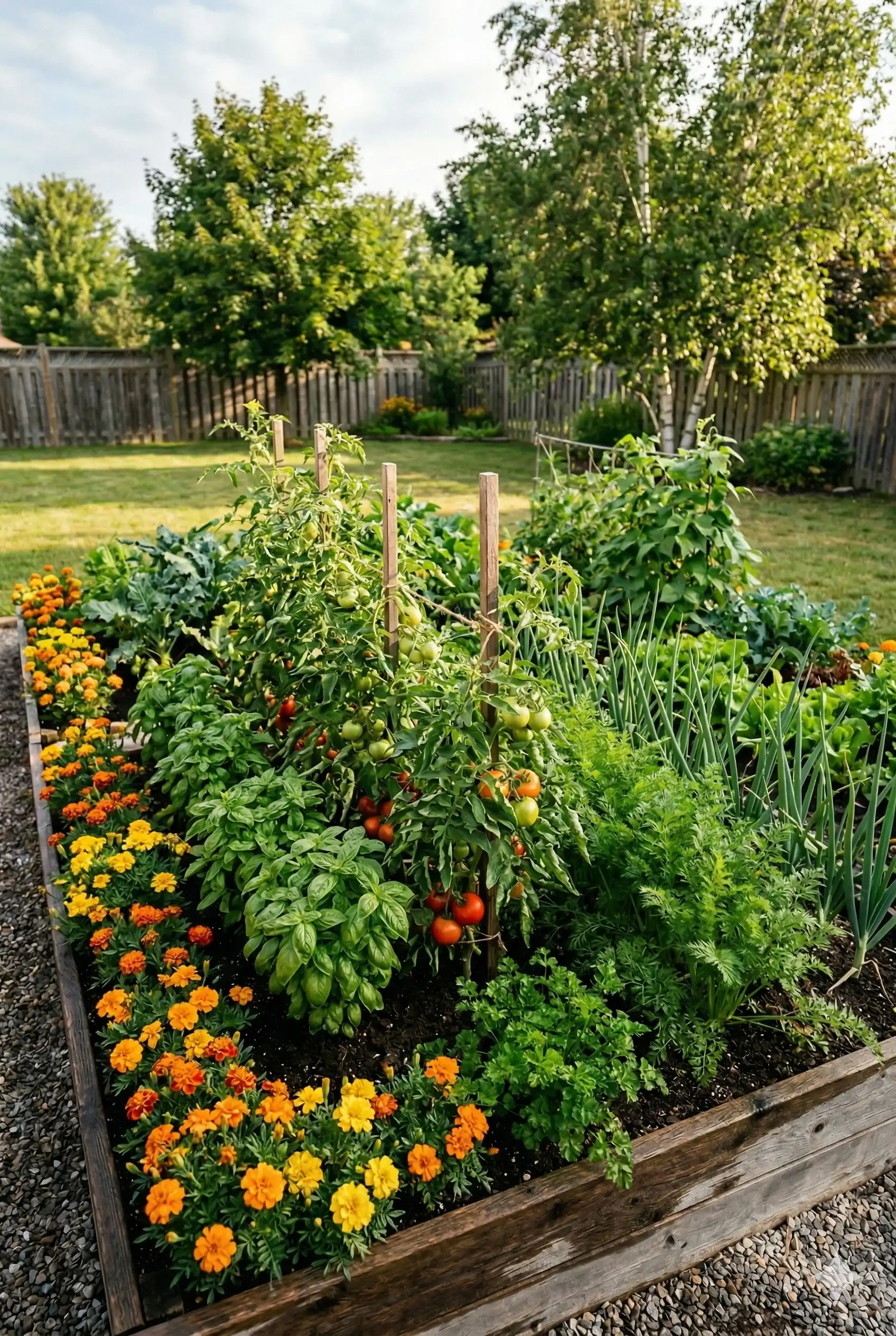
In a 2019 study, researchers discovered that growing French marigolds alongside tomatoes helped reduce whitefly populations.
Marigolds naturally release a substance called limonene, which can help keep these tiny pests away from nearby tomato plants.
What's interesting is that marigolds worked better when planted early, before whiteflies became a serious problem.
So, timing can be just as important as choosing the right plants.
🐛 Why Would You Want to Attract Pests?
Imagine planting two types of squash, knowing that pests prefer one over the other.
By growing the less valuable squash as a distraction, you may be able to protect the crop you actually want to harvest.
This technique is called trap cropping.
For example, Blue Hubbard squash can attract certain beetles and squash bugs away from other squash varieties.
However, there's a catch. If those pests aren't monitored and managed, the trap crop could become another breeding ground for them.
🐝 Can Other Plants Bring Helpful Insects Into Your Garden?
Flowers don't just make your garden look beautiful. They also attract insects that can help protect your crops.
For example, flowering herbs can attract hoverflies, whose larvae feed on aphids, while bees help pollinate crops such as cucumbers and squash.
This means allowing a few herbs to flower instead of harvesting them immediately could provide another benefit to your garden.
🌱 Can Companion Planting Help Save Space?
Absolutely, especially when growing in a small backyard.
Think about carrots and lettuce. Carrots develop underground, while lettuce grows mainly above the soil.
Because they grow differently, gardeners can sometimes plant them together and harvest the lettuce before the carrots need more room.
However, spacing still matters. Crowded plants may compete for sunlight, water, and nutrients.
🌿 Is Every Plant Combination Beneficial?
Not necessarily.
While research supports certain combinations, many popular companion planting rules haven't been scientifically proven.
For example, basil is often said to improve the flavour of tomatoes, but convincing evidence for that claim is lacking.
The next time you're deciding what to plant, think beyond individual crops. A few carefully chosen neighbours might help you manage pests, attract useful insects, and make better use of your growing space.
Sometimes, the secret to a healthier garden is simply understanding how different plants work together.