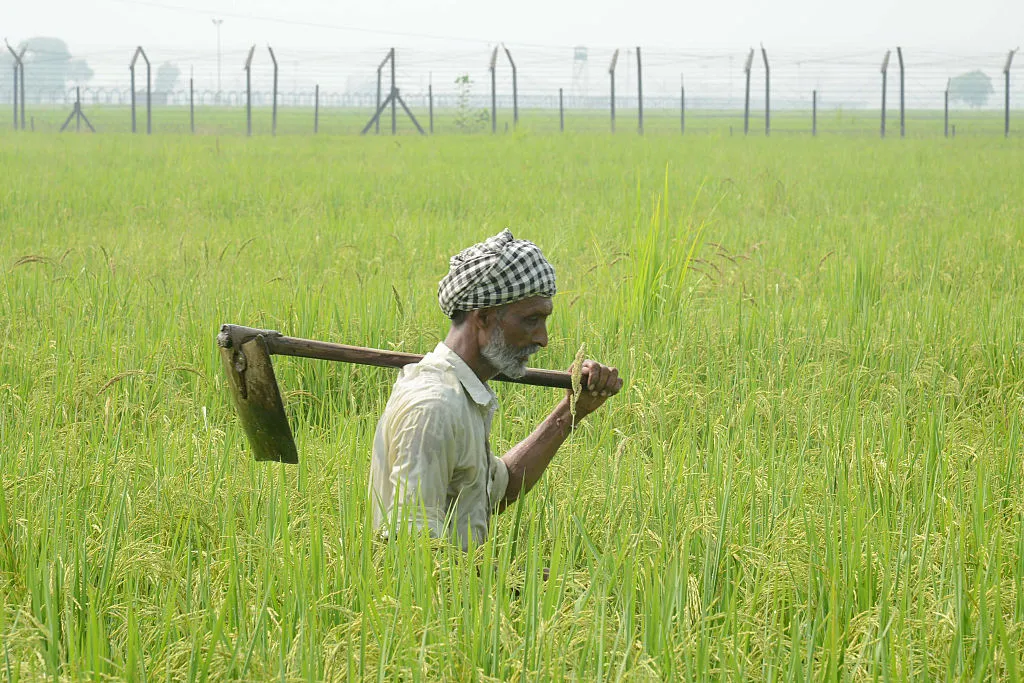
💰 How Much Are Farmers Actually Earning?
The NSO's 2018–2019 survey found that agricultural households earned an average of ₹10,218 monthly from farming and other activities.
Interestingly, wages contributed ₹4,063, while crop production brought in just ₹3,798.
This means these households earned more from wages than from growing crops, highlighting how important additional employment had become.
The survey also found that approximately 70% of agricultural households possessed no more than one hectare of land, limiting their production capacity.
🌱 Where Is the Debt Coming From?
Farming requires investment before crops can generate income.
Seeds, fertilizers, irrigation, equipment, and labour all cost money, often forcing farmers to borrow.
According to the NSO, 57.5% of outstanding agricultural household loans were taken for farming purposes.
While banks and other formal institutions provided most of the borrowed money, professional moneylenders accounted for approximately one-fifth of outstanding loans.
When harvests fail or market prices fall, repaying these loans becomes increasingly difficult.
🚜 What Happens When Farmers Can't Repay?
Farmers who cannot repay their loans may face additional interest, pressure from lenders, or difficulty financing their next harvest.
This can create a cycle where borrowing becomes necessary simply to continue farming.
The consequences can extend beyond the farm, affecting household expenses, education, and financial security.
India's National Crime Records Bureau recorded 10,546 suicide deaths among farmers and agricultural labourers in 2024.
However, these deaths cannot all be attributed to debt. Financial difficulties may be one contributing factor alongside personal, health, and social circumstances.
⚖️ What Is Being Done to Help?
India has introduced agricultural credit programmes, crop insurance, income assistance, and minimum support prices for selected crops.
These initiatives aim to reduce financial risks, but access and effectiveness vary.
Affordable credit, reliable crop insurance, and better market access could help farmers manage costs and improve earnings.
🌿 The Bigger Picture
India's agricultural debt problem highlights a difficult reality: growing food doesn't always guarantee financial stability.
When production costs rise and earnings remain uncertain, borrowing can become a necessity rather than a choice.
If farming households depend on loans and additional employment to survive, how sustainable is farming as a livelihood?