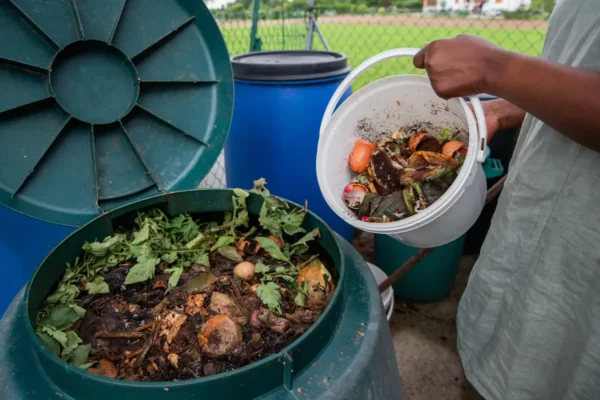
🌱 What Can You Compost?
Good compost starts with a mixture of two types of materials:
Greens — Rich in Nitrogen
- Fruit and vegetable scraps
- Fresh grass clippings from untreated lawns
- Coffee grounds
- Fresh plant trimmings
Browns — Rich in Carbon
- Dry leaves
- Straw
- Shredded plain cardboard
- Uncoated paper
- Small twigs
A simple rule: Start with approximately two to three parts browns for every one part greens, measured by volume. Adjust as needed to keep your compost balanced.
🪴 DIY: How to Make Compost at Home
What You'll Need
- A compost bin or suitable outdoor space
- Green and brown materials
- A garden fork or shovel
- Water
Step-by-Step Instructions
Step 1 — Choose Your Spot
Find a convenient location with good drainage. Use a compost bin with airflow and drainage openings or create a pile directly on the ground.
Step 2 — Add Your Materials
Start with a loose layer of twigs or dry leaves. Add your greens and browns, mixing them as you go. Cutting larger scraps into smaller pieces helps them break down faster.
Step 3 — Check the Moisture
Your compost should feel like a wrung-out sponge: damp, but not soaking wet.
Add water if it's too dry or more brown materials if it's too wet.
Step 4 — Turn Your Compost
Turn the pile every one to two weeks to improve airflow and help materials break down. Less frequent turning is also possible, but decomposition may take longer.
Step 5 — Let It Decompose
Continue checking moisture and turning as needed. Once the materials have mostly broken down, stop adding fresh scraps to that batch and allow it to finish.
Compost can take a few months or longer, depending on the materials, climate, and maintenance.
🌿 How Do You Know Your Compost Is Ready?
Finished compost should be:
- Dark and crumbly, with few recognizable food scraps.
- Earthy-smelling, without unpleasant odours.
- Cool and stable, no longer heating up noticeably after mixing.
If large pieces remain, return them to your next compost batch.
⚠️ What Should You Avoid?
Avoid adding meat, dairy, cooking oils, pet waste, diseased plants, weeds containing seeds, and materials treated with unsuitable chemicals.
These may attract pests, introduce harmful substances, or create problems during decomposition.
Also, avoid letting your compost become too wet or compacted. In rainy climates, cover the pile when necessary. In dry conditions, check moisture regularly.
🌍 Give Your Garden a Natural Boost
Composting is a simple way to reduce organic waste while improving your garden soil.
Finished compost adds organic matter, helps retain moisture, and supports healthier soil structure. It can be mixed into garden soil or spread around established plants.
Start small, use what you have, and let nature do the rest!