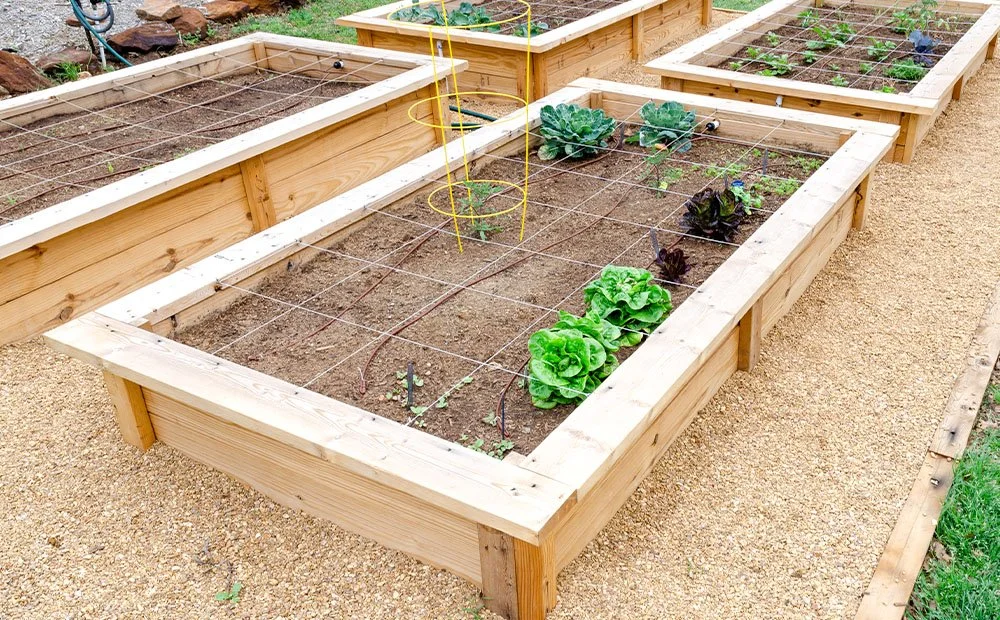
🌱 What Materials Can You Use?
Raised garden beds can be made from several materials:
- Untreated wood: Easy to work with, although it may rot over time.
- Bricks or concrete blocks: Durable alternatives that don't require a wooden frame.
- Galvanized metal: A long-lasting option when designed for gardening.
For this project, we'll use untreated wooden boards.
Some modern pressure-treated wood is suitable for garden use, but avoid old railway sleepers, wood treated with unknown chemicals, or materials that may contaminate your soil.
🪴 DIY: Build Your Raised Garden Bed
What You'll Need
- Four untreated wooden boards, cut to size
- Exterior-grade screws and a drill
- Measuring tape and a level
- A shovel or garden fork
- Quality topsoil and finished compost
Step-by-Step Instructions
Step 1 — Choose Your Location
Find a level area that receives at least six hours of sunlight daily for most vegetables.
Choose somewhere with good drainage and easy access to water.
Step 2 — Measure Your Bed
A bed approximately 4 feet (1.2 metres) wide allows you to reach the middle from either side without stepping on the soil.
For example, you could build a bed measuring 4 feet wide, 6 feet long, and 12 inches deep.
Have two long sides and two shorter ends cut to the correct lengths, allowing for the thickness of the boards where they join.
Step 3 — Build the Frame
Arrange the boards into a rectangle and secure the corners using exterior-grade screws.
Pre-drill holes where needed to prevent the wood from splitting, then check that the frame is level and sturdy.
Step 4 — Prepare the Ground
Clear away weeds and unwanted vegetation.
If building directly on suitable garden soil, leave the bottom open so water can drain and roots can grow into the ground.
Loosen compacted soil beneath the bed if necessary.
Step 5 — Fill Your Garden Bed
For a bed built directly on natural ground, start with approximately two parts quality topsoil to one part finished compost.
Mix evenly, leaving a little space below the rim for watering and mulch.
Water gently and allow the soil to settle before planting.
💧 How Do You Ensure Good Drainage?
Proper drainage helps prevent waterlogged soil and unhealthy roots.
- On natural ground: Keep the bottom open and avoid compacting the soil.
- On concrete or paving: Use a raised planter with suitable drainage outlets, adequate soil depth, and a growing mix appropriate for containers.
- In rainy climates: Avoid areas where water collects.
- In hot or dry climates: Check moisture regularly, as raised beds may dry out faster.
For a simple bed built on natural ground, you generally don't need a gravel layer beneath the soil. Good soil structure and a clear drainage path are more important.
🌿 Ready to Start Planting?
Once your bed is filled and the soil has settled, you're ready to plant!
Choose vegetables or herbs suited to your climate, give them enough space to grow, and water as needed.
Start with one manageable raised bed, learn what grows well, and expand your garden over time.