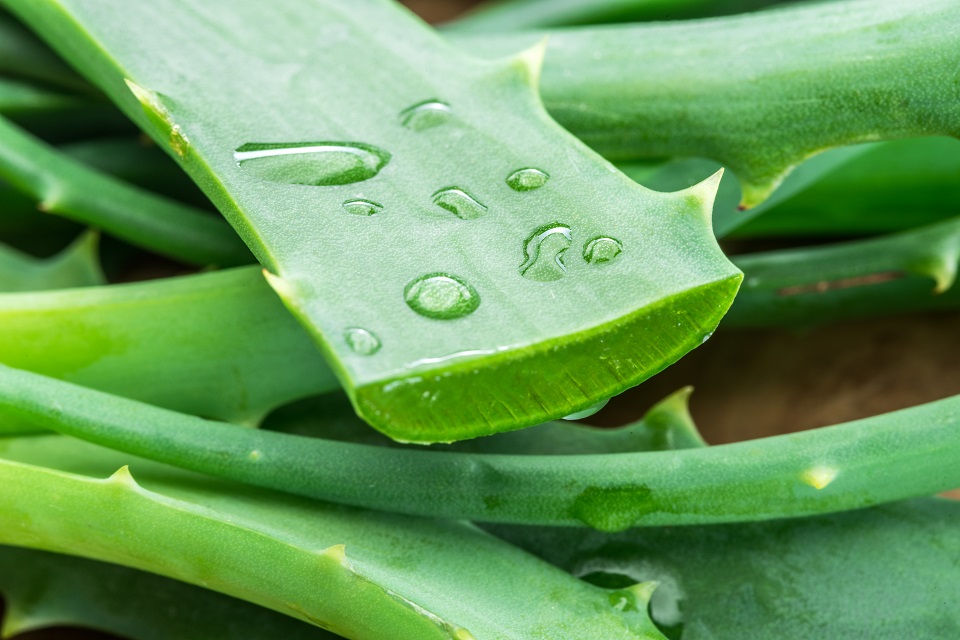
🧬 There's More Inside Aloe Than Just Gel
That clear, slippery gel inside an aloe leaf contains more than just water.
One of its natural compounds, called acemannan, has attracted attention for its possible role in healing.
In laboratory studies, researchers found that acemannan may help cells involved in healing grow and produce collagen, a protein that helps repair damaged tissue.
This suggests aloe may do more than simply cool irritated skin. However, much of this research is still experimental, so we can't assume fresh aloe produces the same results.
🦷 Did You Know Aloe Is Being Studied in Dentistry?
Surprisingly, aloe vera has attracted interest in dental research.
Scientists have investigated aloe-based treatments for painful mouth sores and conditions that cause irritation inside the mouth.
Some clinical studies found improvements in discomfort, while other research has explored whether aloe compounds could help damaged gum tissue heal.
Researchers have even studied aloe preparations for mouth inflammation experienced by patients undergoing cancer treatment.
Although the findings are promising, more research is needed before these treatments can become widely recommended.
☀️ Does Aloe Actually Help Wounds Heal?
We've probably heard that aloe helps burns, but scientists are discovering that the results aren't always the same.
A 2024 review found that certain aloe preparations helped second-degree burns heal nearly four days faster than comparison treatments.
Here's the surprising part: an earlier study found that some surgical wounds actually took longer to heal when aloe gel was used.
That study was small and had limitations, but it raises an interesting question.
Could something that helps one type of wound actually be less useful for another?
The research suggests that the type of wound and how aloe is prepared can make a difference.
🥤 Is All Aloe Safe to Use?
Not necessarily, especially when it comes to drinking it.
An aloe leaf contains clear gel and a yellow substance called latex, found just beneath the outer skin.
Unlike the gel, aloe latex contains aloin, a compound that can cause stomach cramps and diarrhoea.
Researchers have also raised concerns about certain unprocessed whole-leaf extracts after animal studies found an increase in intestinal tumours.
Some manufacturers process aloe to reduce these compounds, but that doesn't guarantee every aloe drink is safe.
It also means homemade aloe preparations aren't necessarily equivalent to commercially processed products.
🌿 There's Still More to Discover
The next time you see an aloe plant growing in someone's yard, you might look at it a little differently.
Beyond its familiar gel, researchers are uncovering compounds and possible medical applications that many of us have never heard about.
And perhaps what's most interesting is that some of these discoveries are challenging what we thought we already knew about aloe vera.