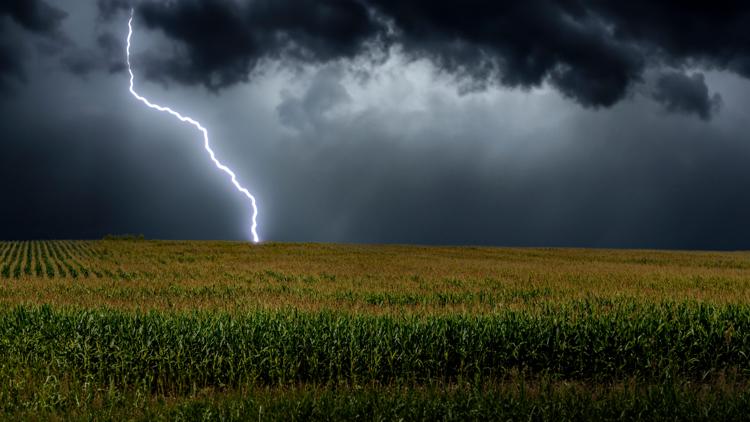
⚡ How Does Lightning Help Plants?
Nitrogen is an essential nutrient that helps plants develop healthy leaves, stems, and roots.
Interestingly, about 78% of the air around us is nitrogen. The problem is that most plants can't absorb it directly from the atmosphere.
Lightning produces enough energy to make nitrogen and oxygen in the air react. This starts a natural process that eventually produces nitrates, a form of nitrogen plants can absorb.
Rainwater can then carry these nitrates into the soil, where plant roots can take them up and use the nitrogen for growth.
It's one of the ways nature helps make nitrogen available to plants.
🌱 Is That Why Plants Look Greener After Rain?
Not entirely.
Rainwater replenishes moisture in the soil, helping plants recover from dry conditions and absorb nutrients more easily.
That's often a major reason plants appear healthier after rainfall.
Lightning also contributes nitrogen through this natural process, but the amount varies. We can't assume that every thunderstorm will produce noticeable improvements in plant growth.
So, while lightning plays a role, the rain itself deserves much of the credit.
🌾 Can Thunderstorms Replace Fertilizer?
No, and here's why.
Although lightning helps make nitrogen available, the amount reaching the soil is generally small compared with what many crops need.
Plants also require other essential nutrients, including phosphorus and potassium.
Healthy soil, proper watering, and appropriate fertilization are still important for producing good harvests.
Thunderstorms can also cause problems. Heavy rainfall may wash nutrients away, while strong winds and flooding can damage crops.
🔬 What Does This Tell Us About Electroculture?
The connection between electricity and plant nutrition is one reason people have been interested in electroculture for centuries.
However, lightning and copper-wire gardening methods work very differently.
Lightning creates intense conditions that trigger chemical reactions in the atmosphere. We can't assume that placing copper wires or antennas around plants will produce the same effects or improve harvests.
Those claims still require reliable scientific evidence.
🌿 So, Are Thunderstorms Good for Your Garden?
They certainly can be.
Rain provides much-needed moisture, while lightning contributes to the natural process that makes nitrogen available to plants.
But the benefits depend on the conditions, and thunderstorms don't guarantee faster growth or bigger harvests.
So, the next time a thunderstorm rolls through, remember that it's doing more than watering your garden. Lightning is also playing a small part in nature's nitrogen cycle.